
Attics and crawlspaces are the parts of a home we visit least, so moisture can sit there quietly. This page is for Freeport, Walton County & surrounding homeowners — and buyers or sellers reading an inspection report — who saw dark staining in the attic or smell something musty near the floor. Calm explanation, what to look for, and who fixes what.
No crawlspace? Most Gulf Coast homes still have an attic, and that part applies to you.
The short version: moisture first, mold second
The EPA puts it plainly: “The key to mold control is moisture control.” The Florida Department of Health notes that mold spores are a normal part of the environment; growth needs a damp surface. EPA also warns that if you clean up mold but don't fix the water problem, the mold will most likely come back. So the order is: find the water, fix it, then remove the growth.
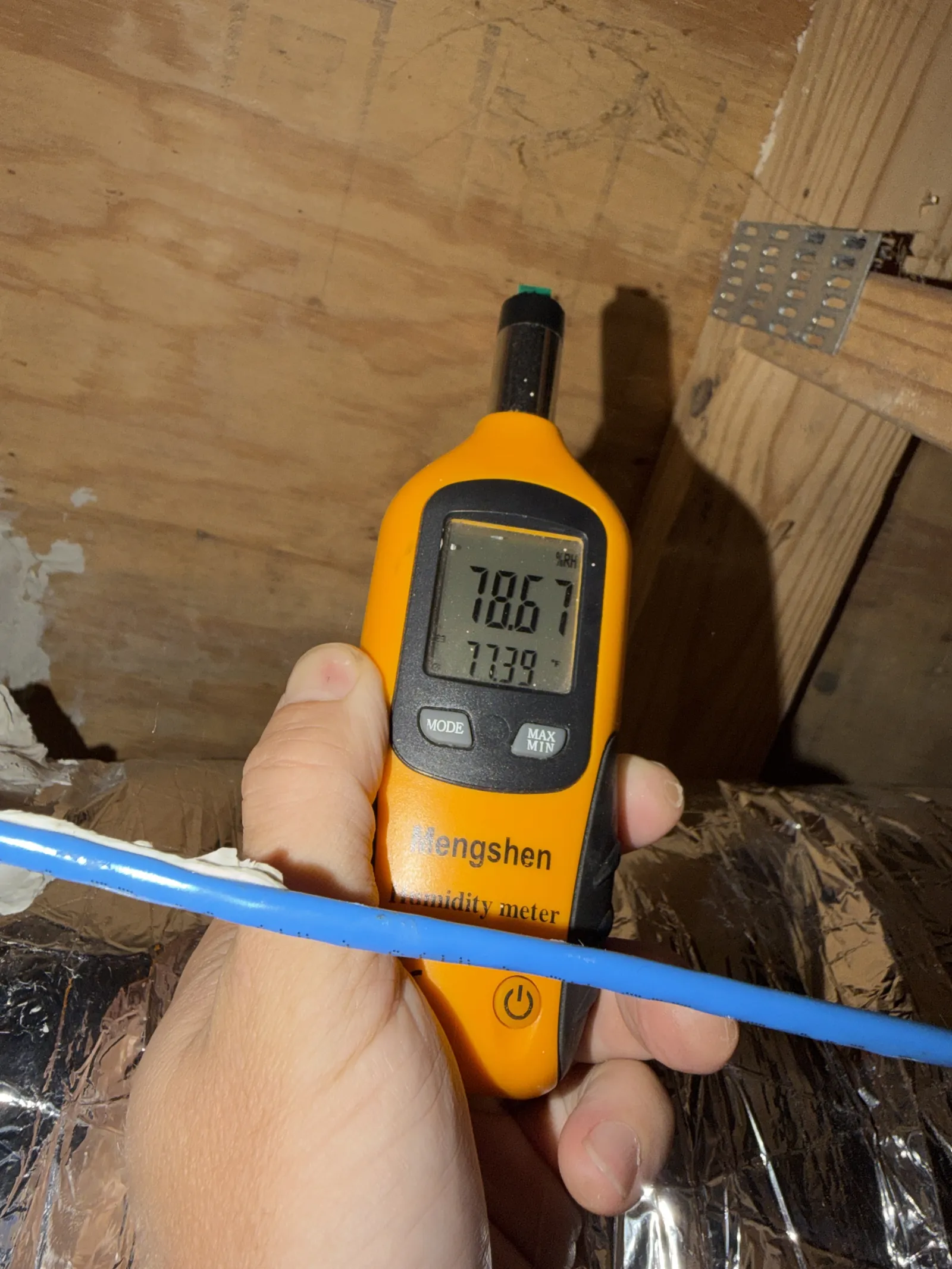
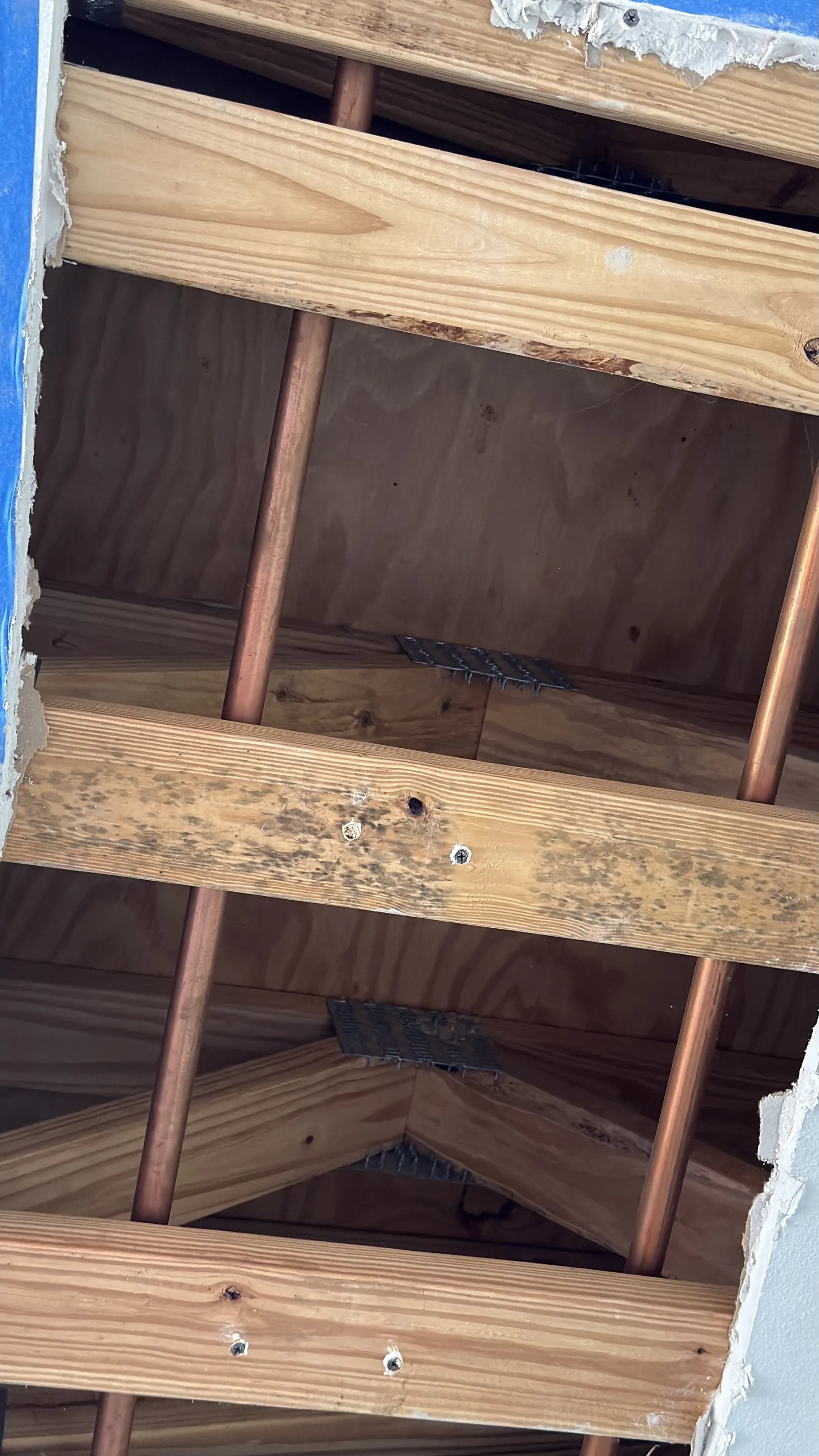
Why attics get damp in Gulf Coast homes
- Roof and flashing leaks. Slow drips can soak roof sheathing or insulation long before a ceiling stain shows.
- Exhaust that ends in the attic. Bath, kitchen, and dryer air should go outside, not into the attic (EPA; DOE ventilation guide).
- Sweating ducts and air handlers. Cold AC ducts in a hot, humid attic can collect condensation (Building Science Corp.; UCF FSEC). EPA's prevention guidance also stresses keeping drip pans and condensate lines flowing.
- Humid air in and out. Researchers at UCF's Florida Solar Energy Center note that in hot-humid climates, venting an attic with outdoor air isn't a reliable moisture fix, and can bring moist air into the attic.
What attic mold often looks like
Dark staining or spotting on roof sheathing or framing, damp or matted insulation, rusty nail tips, or a ceiling stain below. Color alone doesn't tell you the type — and per Florida DOH, you don't need to know the type to act.
Why crawlspaces stay damp under raised homes
Many homes here sit on slabs, so this section is for raised, pier, and crawlspace homes. EPA's mold course notes that crawl spaces with high humidity are common places for hidden mold, especially over bare soil. Soil gives off moisture, a high water table can let groundwater in, and that damp air can move up into the house. On the Gulf Coast, add humid outdoor air, rain that drains toward the foundation, and plumbing leaks.
Signs you might notice from inside
- A musty or earthy smell at floor level or in closets
- Floors that feel damp, or wood floors that start to cup
- Rooms that stay clammy — see Florida humidity
- Visible growth on joists, or sagging insulation, if you look in
Safety first: look from the access opening with a flashlight. Don't crawl in if it's wet, or if there are wiring hazards or pests. For general signs around the house, see how to spot mold.
“Should I seal the vents?” Why the answer depends on the house
Public guidance doesn't fully agree here, and we'd rather say so. EPA's consumer page on controlling moisture suggests covering crawlspace dirt with plastic and keeping crawlspaces well-ventilated. Florida and Southeast building-science research (UCF FSEC; U.S. DOE Building America) finds that outdoor air in hot-humid climates often doesn't dry these spaces, and looks at properly designed sealed or conditioned approaches instead. DOE's crawlspace guide cautions that simply closing vents without the rest of the design can make moisture worse, and that local code should be checked.
The takeaway: this is a building decision for a qualified builder, HVAC, or energy professional. Our part is the mold that's already there and the moisture readings around it.
Do you have to remove it, and can you do it yourself?
Florida DOH advises removing indoor mold growth promptly, says you don't need to test to find out what kind it is, and notes bleach usually isn't necessary. Small spots on hard surfaces can often be cleaned with detergent and dried. Moldy insulation and other porous materials usually need to be removed and replaced (Florida DOH; UF EH&S).
Attics and crawlspaces are tight, hot, and dusty, and disturbing growth can spread dust into the house. Larger areas are where containment matters. See DIY vs pro for where the line usually sits, and our process for how containment works. Professional remediation follows industry procedures described in ANSI/IICRC S520.
Who fixes what (a calm map)
- Roof or flashing leak → roofer
- Sweating ducts, condensate, AC sizing → HVAC contractor
- Pipe or drain leak → plumber
- Vent-vs-seal design, code questions → builder or energy professional
- Testing or assessment, if you want it → an independent Florida-licensed mold assessor (Florida licenses assessors and remediators separately — see DIY vs pro)
- Removing existing growth, drying, containment → a remediator (that's us)
Fixing the source and removing the growth are both needed, and the order matters. We're not a roofer, HVAC contractor, or encapsulation installer — we'll tell you which trade fits.
What to do next
- Note what you see or smell, and where. Take a photo from the hatch if it's safe.
- Measure indoor humidity with a simple meter — see Florida humidity and prevention.
- Call the trade that matches the source.
- If growth is already there, or you're not sure what you're looking at — Call. We'll tell you straight. 850-686-6675. Or read about our mold remediation.
Also useful: how to spot, what mold is, education hub.
Call. We'll tell you straight. · 850-686-6675 · Freeport, Walton County & surrounding
People first. Property second. · Est. 2018 · Veteran owned
Sources & standards
Prefer official .gov and IICRC pages over secondhand blogs. Practices change — check the live source.
- EPA — A Brief Guide to Mold, Moisture, and Your Home — moisture control & homeowner basics
- Florida Department of Health — Mold — Florida public-health guidance
- IICRC — About ANSI/IICRC S520 — professional mold remediation standard (info page; we do not reproduce the paid text)
- EPA — Mold Course, Chapter 2 (incl. Lesson 6: Crawl Spaces) — where hidden moisture and mold show up
- EPA — Mold Course, Chapter 9 (Prevention) — drip pans, venting, dehumidifying
- EPA — What are the main ways to control moisture in your home?
- UCF Florida Solar Energy Center — Attic Insulation and Ventilation — Florida building-science research
- U.S. DOE Building America — Guide to Closing and Conditioning Ventilated Crawlspaces (PDF) — design and code questions for qualified pros
- U.S. DOE — Consumer Guide to Home Ventilation (PDF)
- Building Science Corp. — Vented and Sealed Attics in Hot Climates (PDF)
- UF Environmental Health & Safety — Mold Clean Up Guidelines
- UF/IFAS EDIS — Moisture Control in Your Home
This page is education, not medical, building-design, or code advice. Agency points are attributed to the source cited. Health symptoms → talk with a doctor. A remediator addresses the house — not a medical diagnosis.